

Management Summary
When a long-established food company with around 400 employees found itself in an existential crisis, swift and decisive action was essential. The 69-year-old founder recognized the severity of the situation: a failed investment, mounting financial pressure, and an increasingly overwhelmed management team threatened to destroy the family business he had built over several decades.
At this critical juncture, the founder sought external support. The GOiNTERIM manager took on responsibility as Interim Chief Restructuring Officer (CRO). Within 24 months, he not only succeeded in stabilizing the company and repositioning it financially, but also in successfully initiating the long-postponed generational transition. It was a dual challenge that was mastered through clear direction and consistent strategic execution.
Company
The company is a family-owned, medium-sized business in the food industry with more than three decades of successful market presence. Offering a broad product range for retail and food service, it operates across three locations in Germany and generates annual revenue of approximately €250 million.
As is often the case with family businesses, the management structure was strongly shaped by the founder’s personality. His vision, decisions, and entrepreneurial instincts had driven the company’s success for many years. However, evolving market dynamics, increasing organizational complexity, and the emergence of a new generation within the company were placing growing pressure on the existing structures.
Initial situation
The crisis hit sooner than expected: A loss-making joint venture left deep holes in the balance sheet, the liquidity situation became increasingly strained, and operational structures lost their effectiveness. The founder grew increasingly doubtful about his ability to manage the company—and about the management team’s ability to overcome the challenges. Added to this was a generational transition that had been postponed for years. The son was involved in the company but not yet ready to take the helm. The timing for the transition seemed as bad as it could be—and yet there was no alternative. Amid economic uncertainty, the company not only had to successfully implement a strategic realignment but also had to navigate a sensitive and, above all, sustainable succession plan.
Goals and tasks
The GOiNTERIM manager faced a dual challenge: On the one hand, the company had to be stabilized financially in the shortest possible time. The goal was to regain operational capability – through secured liquidity, streamlined structures, and a strengthened management team.
On the other hand, it was equally crucial to professionally prepare for the upcoming generational transition. This included the gradual development of the successor, the establishment of a clear leadership profile, and the reorganization of the management team – with the aim of ensuring the company’s future viability and independence from the founder.
Measures and Implementation Steps
My role as interim CRO began with a comprehensive assessment in accordance with the IDW S6 standard. Within a few weeks, a detailed restructuring plan was developed that both analyzed the company’s financial situation and identified specific areas for action. Clear priorities, a rigorous action plan, and the involvement of key stakeholders ensured acceptance and feasibility from the very beginning.
The initial focus was on financial stabilization. Outstanding receivables were systematically collected, short-term revenue drivers were strategically activated, and existing lines of credit were renegotiated. A strategically initiated private placement provided additional flexibility. At the same time, the interim CRO took over operational management—particularly in production and the supply chain—after the previous managing director of operations stepped down.
The organizational restructuring involved far-reaching changes: The commercial structure was reorganized, controlling and management processes were overhauled, and a modern IT system was implemented. The product portfolio was streamlined, internal duplicate structures were eliminated, and several group companies were successfully merged.
Once the first visible signs of stabilization became apparent, the focus shifted to succession planning. Working closely with the founder, the interim manager systematically guided the founder’s son into his new role. One-on-one meetings, targeted mentoring, role clarification, and leadership coaching formed the basis for successful development. A second managing director with technical expertise was appointed, and responsibilities were clearly defined—a crucial step toward a resilient, sustainable leadership structure.
Achievements and Results
The results speak for themselves: Within two years, the company was not only successfully restructured but also strategically realigned. Liquidity was secured, sources of loss were eliminated, and the company was once again fully operational—operationally, financially, and structurally.
Particularly noteworthy: The generational transition was also carried out professionally. The founder’s son assumed responsibility in a strengthened leadership role and was increasingly accepted by the workforce and management as the new leader. The father, who now works behind the scenes as a consultant, facilitated a respectful yet consistent transition—without interfering in day-to-day operations and with full confidence in the new leadership.
The combination of a far-reaching restructuring and smart succession planning not only ensured the company’s continued existence but also opened up new strategic opportunities. The involvement of the interim manager proved to be a key factor: independent of internal power structures, free from political constraints, and with full accountability for results, the realignment was implemented consistently. At the same time, the necessary space was created not only to manage the generational transition but also to shape it in a sustainable manner.
Conclusion
This case study demonstrates how effective professional interim management can be during complex and critical phases of a company’s development. Under the leadership of the GOiNTERIM manager, who served as interim chief restructuring officer, not only was a far-reaching restructuring consistently implemented, but a sensitive generational transition was also successfully managed. The combination of analytical clarity, entrepreneurial leadership, and operational decisiveness enabled the sustainable stabilization of the company and prepared it—both structurally and in terms of personnel—for a successful future. In this context, interim management proved not to be a short-term stopgap measure, but rather a strategic tool for sustainable transformation—purposeful, independent, and with a clear focus on results.
Would you like more information, or are you facing similar challenges? Please contact us—we’d be happy to help!
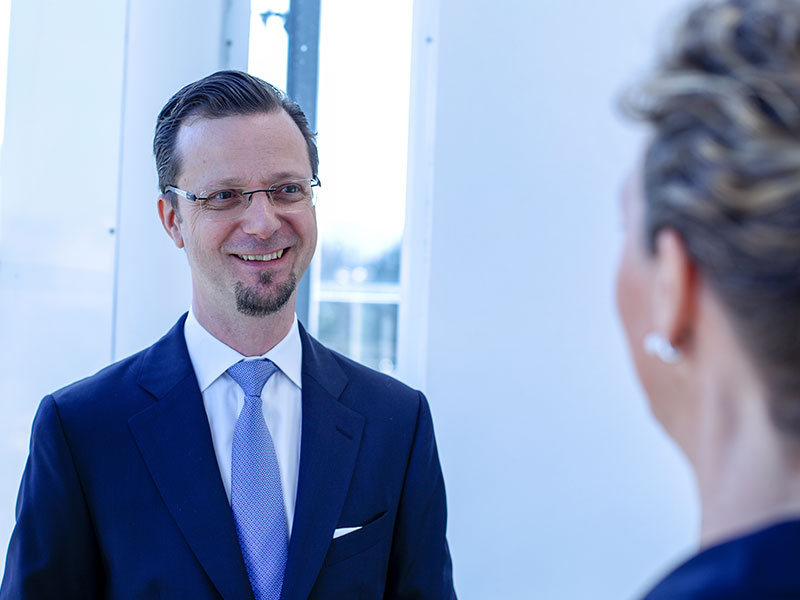
Dr. Martin Ludwig Mayr, Managing Director
martin.mayr@gointerim.com
+49 89 20 500 8695